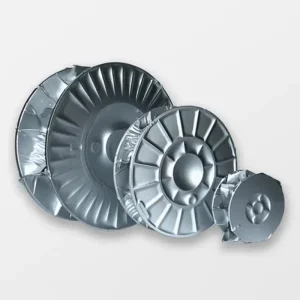
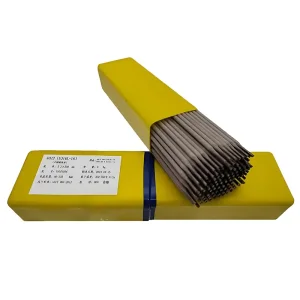
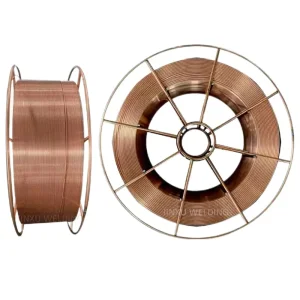
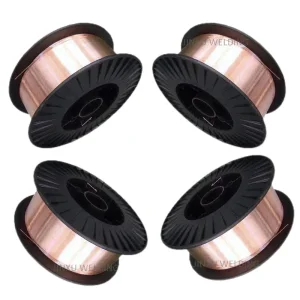
Explore our core product line manufactured to ISO9001 and CE certifications.
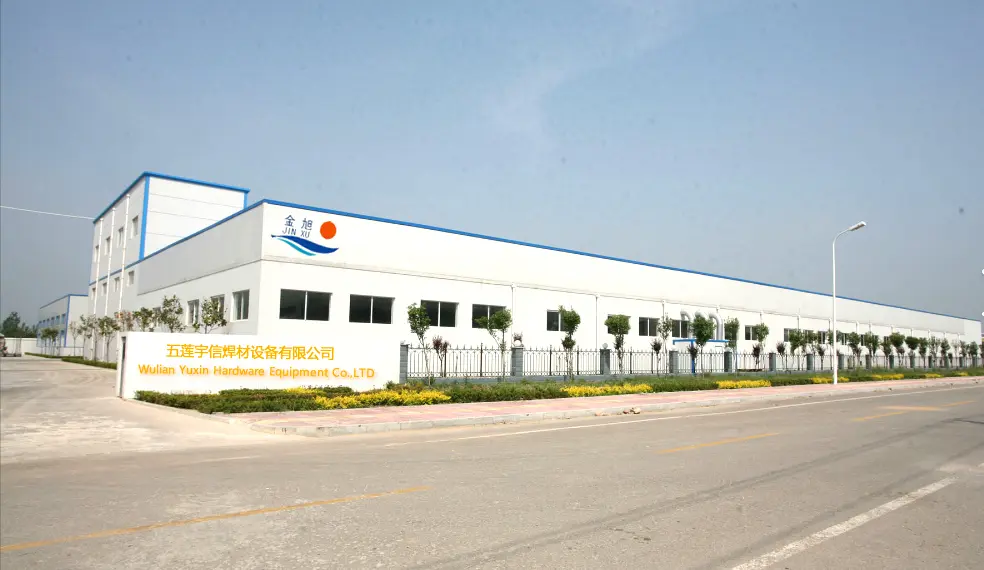
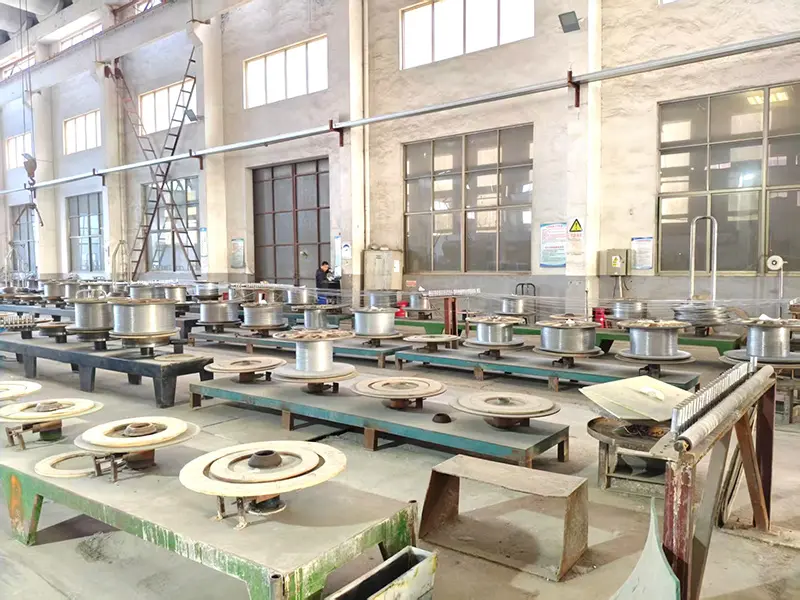
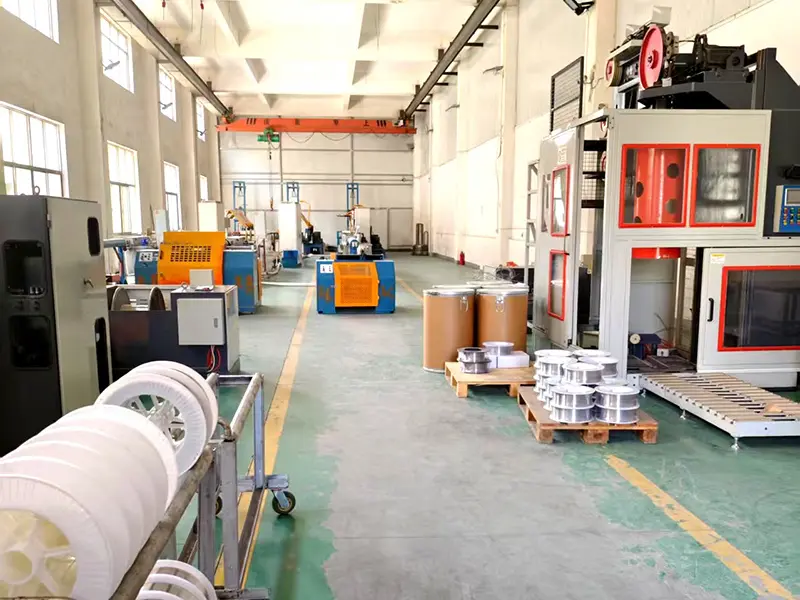
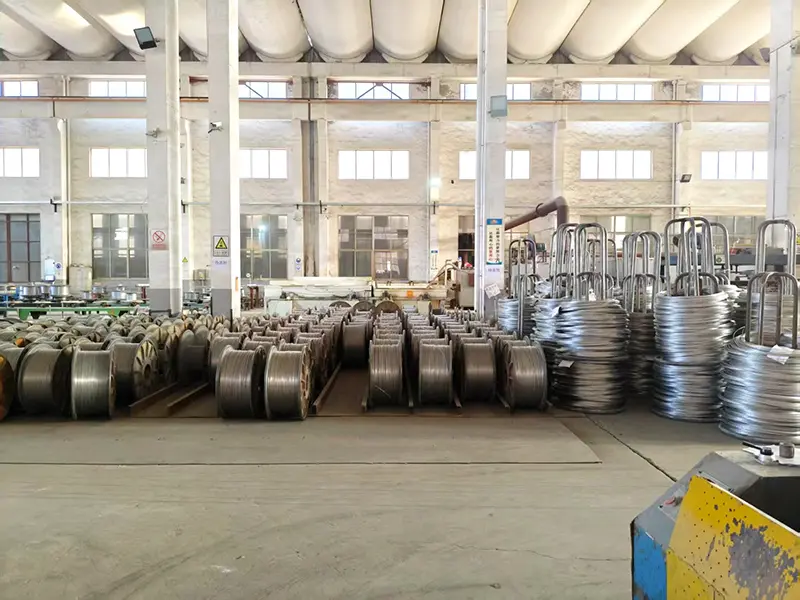
Established in Wulian, Rizhao City, Shandong Province, Wulian Yuxin Hardware Equipment Co., Ltd. has grown from a locally excellent manufacturer to a globally recognized producer of premium welding consumables. With our own 15,000-square-meter production facility and advanced manufacturing equipment, we proudly maintain complete control over our production processes, ensuring consistent quality across our entire product range.
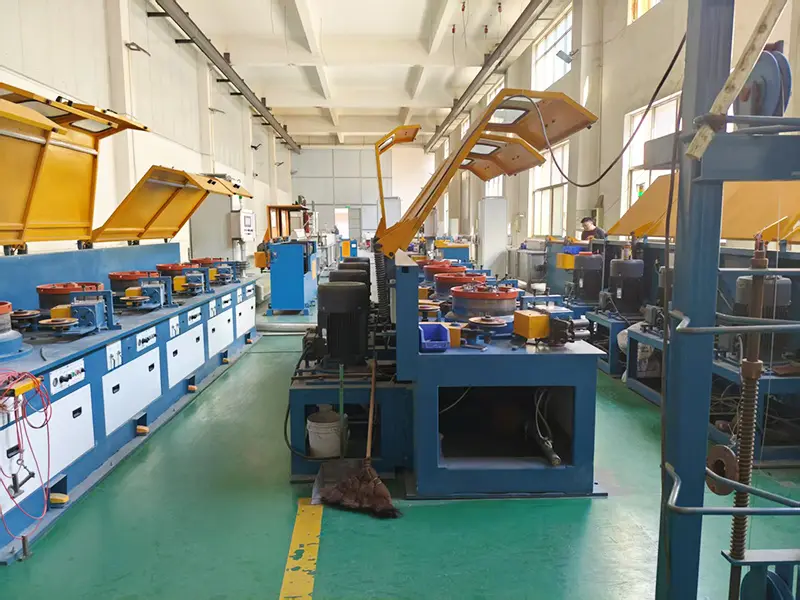
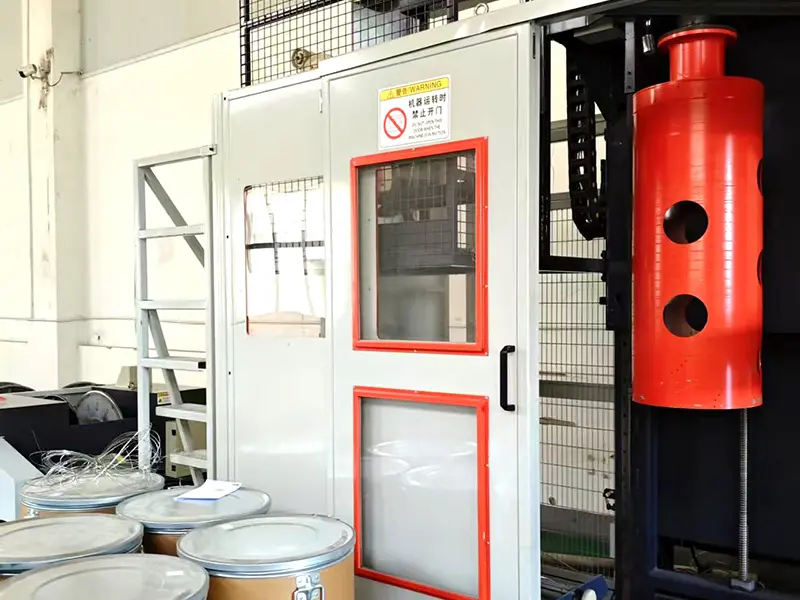
Over the past two decades, we have continuously reinvested in high-tech manufacturing upgrades, building automated wire drawing lines, precision winding equipment, and a state-of-the-art chemical laboratory. This focus on internal capabilities has enabled us to achieve structural cost optimization, making us a strategic partner for distributors and direct industrial buyers who seek the best China MIG wire roll supplies without compromising structural safety standards.
The global welding consumables market is experiencing a profound transition driven by the rise of automation, large-scale infrastructural initiatives, and the transition toward highly efficient gas metal arc welding (GMAW/MIG) practices. Central to this transition is the demand for premium MIG wire rolls that can sustain high-feed rates, prevent arc micro-interruptions, and minimize downtime in robotic cells. As the world’s manufacturing powerhouse, China produces a substantial proportion of the global MIG solid wire and flux-cored wire supply. However, the distinction between standard commercial grade consumables and high-end industrial consumables lies in the metallurgical precision and layer-control implemented by factories like Wulian Yuxin Hardware Equipment Co., Ltd.
To understand the economics of the best welding MIG wire roll sourcing, one must analyze the raw material supply chain. Most high-performance MIG wires, such as the widely specified ER70S-6 grade, rely on high-grade carbon steel wire rods containing strict compositions of Manganese (Mn) and Silicon (Si). Shandong Province, where our manufacturing base is situated, offers unmatched logistics access to China's leading metallurgical facilities, ensuring a stable influx of refined wire rods. This logistical footprint permits us to sustain production schedules even during global raw material fluctuations, giving international contractors and wholesale buyers an unyielding, predictable supply link.
A major structural failure in heavy welding projects is often traced to trace element inconsistencies in the wire. Under AWS A5.18 guidelines, ER70S-6 requires a precise combination of Silicon (0.80% to 1.15%) and Manganese (1.40% to 1.85%). Silicon behaves as a robust deoxidizer, lifting impurities to the slag pool and preventing porosity, while Manganese boosts tensile strength and weld bead transition aesthetics. Cheap formulations often skirt the upper bounds of carbon or cut down on Manganese to save costs, which results in brittle joints under low-temperature conditions. Wulian Yuxin maintains strict chemical control tolerances that are up to 30% narrower than the baseline standards dictated by AWS.
A MIG wire roll is not merely a strand of steel; it is a highly engineered composite system comprising the core steel chemistry, the copper-coating thickness, and the winding layout. Let’s break down the three primary vectors that distinguish the best welding MIG wire roll from lower-tier alternatives:
Solid carbon steel MIG wire is coated with a microscopic layer of copper. This layer serves two key purposes: it prevents atmospheric moisture from causing oxidation on the steel wire surface during storage, and it facilitates optimal electrical current transfer within the torch’s contact tip. In low-quality factories, the copper coating process is poorly controlled, resulting in uneven thickness, flaking, or high friction coefficient. Copper flakes scrape off inside the liner, clogging the torch assembly and causing "wire nesting." Wulian Yuxin utilizes an advanced chemical bath electroplating technique that produces an ultra-thin, highly adherent, and uniform copper coat, reducing contact tip erosion and optimizing arc starting stability.
In high-speed robotic welding setups, wire spool changeovers must be seamless, and feeding interruptions can ruin an entire production cycle. Wulian Yuxin employs automated precision row-by-row layer winding (also known as PLW) for our 15kg and 20kg MIG wire rolls. Unlike random-wound wires which can overlap and cross, precision wound wire unspools with minimal resistance and zero tangles. This winding accuracy maintains a constant cast and helix, ensuring the wire exits the contact tip in a predictable path, directly impacting joint alignment in automated assembly lines.
When a length of wire is pulled from the spool and placed on a flat surface, the diameter of the circle it forms is the "cast," and the distance the end rises off the flat surface is the "helix." Under industrial guidelines, a cast between 15 and 30 inches and a helix under 1 inch are standard. Deviations outside these ranges cause the wire to oscillate inside the contact tip, leading to arc instability, wandering weld lines, and increased spatter. Our quality control lab measures cast and helix on every batch of ER70S-6 wire to guarantee mechanical compatibility with the latest push-pull gun systems.
Ultra-adherent copper electro-plating prevents corrosion in high-humidity shipping and storage conditions.
Fully automated winding lines prevent overlapping, reducing feeding friction and eliminating tangles in automated cells.
Rigid control metrics prevent wire wandering at the contact tip, assuring precise weld placement.
Different welding processes require distinct wire compositions and configurations. Below is an exhaustive breakdown of our key product segments, combining technical features with their localized application fields:
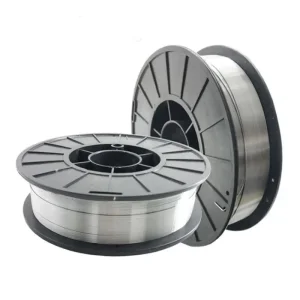
As the workhorse of carbon steel fabrication, ER70S-6 solid wire is designed to be used with shielding gases like CO2 or Argon/CO2 mixes. The high levels of deoxidizers in ER70S-6 allow it to perform smoothly even on mild steel parts that have small amounts of scale, rust, or paint. This makes it the ideal choice for automotive chassis fabrication, pressure vessel fabrication, and general structural steel buildings. Its smooth feeding capability renders it perfect for robotic weld cells demanding 24/7 runtimes.
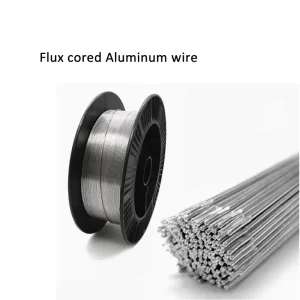
Flux-cored arc welding (FCAW) utilizes a hollow wire filled with fluxing agents. E71T-1C is designed for structural applications where outdoor wind speeds make gas shielding with solid wires impractical. The fast-freezing slag system supports all-position welding, including vertical-up and overhead. Common applications include shipbuilding, heavy machinery frames, and bridge construction where deep penetration and high deposition rates are crucial.
These wires feature a low carbon content (indicated by the "L") to prevent intergranular corrosion caused by chromium carbide precipitation. ER308L is the standard for welding austenitic stainless steel grades (such as 304), while ER316L adds Molybdenum for superior resistance to chloride-induced pitting. These products are widely deployed in chemical processing plants, food and beverage processing, and pharmaceutical equipment fabrication.
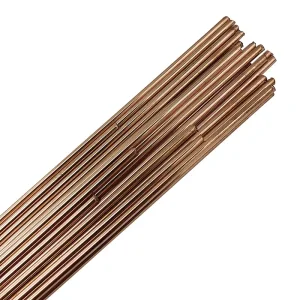
For high-precision welding on thin sheets or root passes in pipe joint configurations, our Argon-Arc TIG solid wire offers clean, deposit-free pools. For manual metal arc (MMA) operations, our shielded electrodes (E6013 for general purpose, E7018 for low-hydrogen applications) offer excellent slag detachability, a stable arc, and minimal post-weld cleanup effort.
Every industry faces a unique set of operating conditions and weld qualification codes. Here is how Wulian Yuxin matches specific sector requirements with appropriate welding consumables:
In automotive manufacturing, cycle times are measured in seconds. Spatter must be minimized to avoid post-weld polishing before paint application. Wulian Yuxin’s ER70S-6 wire undergoes a proprietary chemical cleaning step post-drawing to eliminate drawing lubricants, resulting in a clean, spatter-free arc with CO2/Argon mixed gases.
Bridges and high-rise structures are subject to cyclical load stress. Consumables must guarantee high impact toughness at sub-zero temperatures. Our E71T-1C flux-cored wire displays superior Charpy V-Notch (CVN) impact values down to -30°C, fully satisfying structural engineering specifications across Europe and the Americas.
Looking to the next decade, the welding consumables industry is evolving around three primary engineering vectors: environmental sustainability, advanced metallurgical purity, and integration with high-speed automated systems.
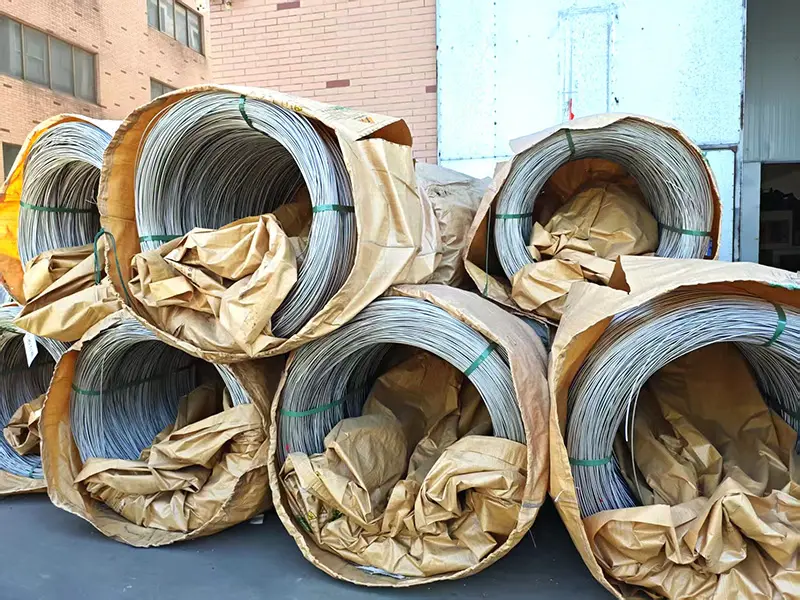
Transitioning to fully recyclable spools and moisture-absorbent packaging material that eliminates plastic waste while keeping the wire in pristine condition during sea transit.
Developing specialized copper-free solid wires that utilize thin organic coatings to prevent rust, avoiding copper vapor emissions during manual and robotic welding.
Integrating digital lot tracking and composition tracing via smart QR codes on each spool, facilitating real-time quality assurance scanning on the manufacturing floor.
Operating a 15,000-square-meter modern production facility in Wulian, Rizhao City.
Technical Sourcing & Quality Control Insights from Sourcing Specialists
Select our quality-tested welding consumable products for your production floor
 Yuxin
Yuxin